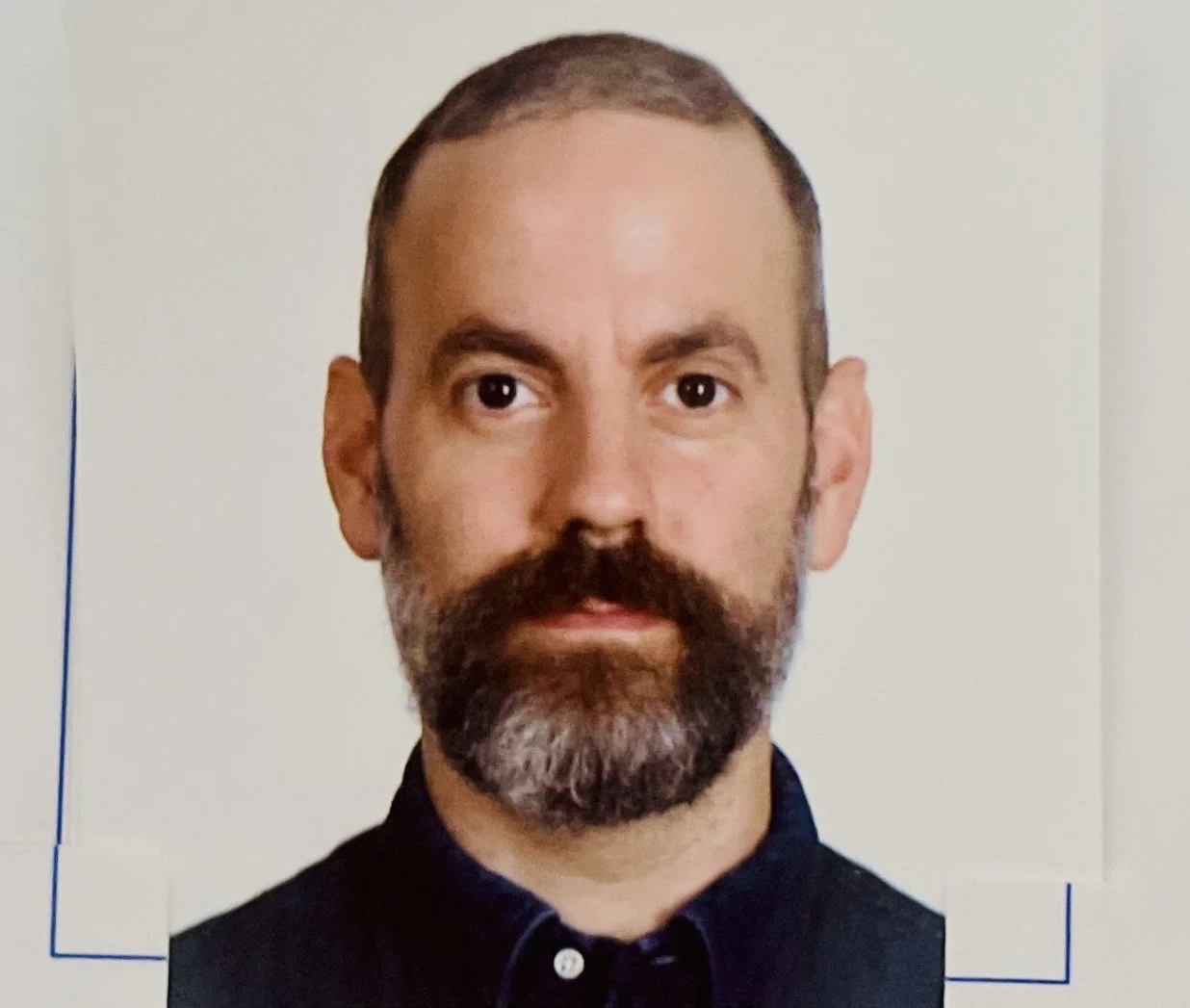
About Grant Sutton, LAc
I grew up in eastern North Carolina and studied literature at the University of Virginia. After graduating in 2003, I moved to New York and spent several years working in independent film and reality television. I started practicing yoga in 2000 and continued through my New York years — it was my first real entry point into thinking carefully about the body, breath, and the nervous system, and that work still shapes how I approach a treatment room today.
What changed everything was my grandmother. Irene was diagnosed with an aggressive squamous cell lung cancer, and I came home from New York to care for her through the end of her life. I learned more in those months — about the body, about pain, about what comfort actually means when curative options have run out — than any classroom would have taught me. It clarified what I wanted to do with my working life. I applied to graduate school the following year.
I earned my Master of Acupuncture and Oriental Medicine from Oregon College of Oriental Medicine in 2011, with a specialty track in acupuncture and Chinese herbology. While at OCOM, I completed clinical externships at Nanjing University of Traditional Chinese Medicine — watching acupuncture practiced in hospital settings, at a scale and integration that bears almost no resemblance to how the medicine is usually presented in the United States. After graduating, I practiced in Portland and Lake Oswego, and served as a teaching assistant at OCOM in point location, needle technique, living anatomy, and shiatsu. Portland was also where I trained as a Yoga Alliance certified teacher and began teaching yoga alongside my clinical work. Teaching either discipline is where I learned what I actually knew and where the gaps were — a clarifying experience I'd recommend to any clinician.
I moved to New Orleans in 2016 and have been practicing here ever since — first as part of the interdisciplinary team at HealthArt in Metairie, then in independent practice.
Why oncology, fertility, and perimenopause
These aren't general-wellness specialties. They're the three areas where the patients I see tend to be navigating something serious, where the stakes are high, and where the gap between "an acupuncturist might help" and "an acupuncturist trained for your specific situation" is widest.
For oncology, I completed Memorial Sloan Kettering Cancer Center's Fundamentals of Oncology Acupuncture program — one of the most rigorous programs of its kind. I'm a member of the Society for Integrative Oncology, and I've completed hospice and palliative care acupuncture training, because not every patient is in curative treatment. My grandmother's care taught me that comfort at the end of life is its own kind of medicine, and I take palliative work seriously. I also hold an oncology massage therapy certificate from East Jefferson General Hospital, where I've served as a guest lecturer in the family medicine residency program — translating what integrative practitioners actually do for the physicians who decide whether to refer to one.
For fertility and IVF, I've worked with reproductive medicine patients for more than a decade, at every stage from initial trying through multiple failed cycles. I coordinate with reproductive endocrinologists rather than working around them. The transfer-day protocol well-known in the field is a routine part of my practice, but the more important work is usually the months of cycle-timed support that precede it.
For perimenopause, the specialty came partly from listening. A meaningful percentage of the women I was seeing for unrelated issues were also navigating the transition and finding their other care underwhelming. The research on acupuncture and vasomotor symptoms is among the more replicated areas in the field, and clinical results are usually visible enough within six to eight weeks to know whether someone is responding.
What I believe about evidence
I tell patients what the research supports and what it doesn't. The Society for Integrative Oncology, alongside ASCO, publishes clinical practice guidelines on integrative therapies in cancer care, and my practice is informed by those guidelines. Where the evidence is strong, I say so. Where it's mixed, I say so. Where acupuncture is unlikely to help, I say that too, and I'll refer out when it's the right call.
That commitment isn't only clinical. In 2019, I served as Vice President of the Louisiana Acupuncture Association, working on expanding acupuncture insurance coverage in the state and collaborating with the Louisiana State Board of Medical Examiners on healthcare policy. The same standards I want for my own patients, I want available to patients across Louisiana.
Outside the treatment room
Working with patients navigating cancer, fertility, and major hormonal transitions is intense work, and I've learned to build a life around it that can support the weight. I'm a published essayist — my writing has appeared in Vulture / New York Magazine, A Woman Is a Cinema, and through Feminist Press — and I find that writing keeps me honest about language, about saying what I actually mean and not what's easier to say, which is a useful discipline for clinical work too. I also work as an event floral designer and an amateur flower grower; it's a creative counterweight to the seriousness of the clinic. I weight train regularly. I live in New Orleans with my partner, a physician, and our two rescue dogs, Marcel and Toots.
How to reach me
My practice is at 4322 Canal Street in New Orleans, alongside Podesta Wellness. I'm cash-pay with superbills. I keep my schedule intentionally small, which means new patients can usually get in within a week or two but not always the same day. If you're navigating cancer treatment, fertility care, or perimenopause and want to talk through whether acupuncture is a fit, reach out — I'm glad to.